• Skip to primary navigation
  • Skip to main content

Ted Curtin

Anthology of blogs and book information from author Ted Curtin

Stories
  • Home
  • About Ted
  • Books
  • Reviews
  • Blog
  • Get in Touch

Friday Blog

Mother’s Day Ramblings

May 15, 2024 by tcurtin

Happy Mother’s Day to all the wonderful moms out there.  Here is some Mother’s Day food for thought I wrote down four years ago.

The roots of the holiday trace back to the Civil War. Julia Ward who wrote the lyrics to “The Battle Hymn of the Republic” started a campaign in Boston for a mother’s day that celebrated peace and protested war. Meanwhile in West Virginia, Ann Jarvis, who had spent years helping poor mothers, formed a committee to foster friendship between mothers from the North and the South.  After Ann’s death, her daughter Anna Jarvis decided to continue her quest for a national day for moms.

Anna’s efforts were rewarded in 1914 when President Woodrow Wilson set aside the second Sunday in May as a nationwide holiday. Businesses immediately seized the opportunity to sell flowers, candies, and cards. Anna Jarvis felt the commercialization was detracting from the spirit of Mothers’ Day and began staging boycotts of the holiday she created. Jarvis eventually used her last dollar in the unsuccessful fight. She died broke and blind at the age of 84 in a sanitarium. Evidence indicates that persons connected with the floral and greeting card industries paid the bills to keep her in the sanitarium.

Trivia

Because one of the first utterances babies make is a “ma” sound, most languages around the world use that sound as the basis for their word for “mother. The Mandarin word for “mom” is “mama”, the Icelandic word is “mamma” and the Vietnamese word is “me”.

Most countries set aside an annual mother’s day and some have unique traditions. For example, mothers in Serbia are tied up with rope or ribbon until they give sweets and gifts to their children.  

47% of moms think that fathers should buy the mother of their kids a gift while only 6% of dads agree. 

Cheating websites such as Ashley claim that on the day after Mother’s Day there is a dramatic increase in mothers signing up. Could it be because of the gift disconnect?

On average, people spend $196 on Mother’s Day compared to $133 on Father’s Day.

When landline telephones were the norm, Mother’s Day was the busiest day of the year for long distance calls. Father’s Day set the record each year for number of collect calls.

Each of those sweaters that helped make Mr. Rogers famous were hand-knit by his mother.

Hugh Hefner went to his father for a loan to finance a magazine that would become Playboy. His public accountant father refused because he thought it was a bad investment. Hefner’s mother grabbed Hugh before he left the house and gave him $1,000 to kick-off his venture.

Some Bad Muthas

Most mothers I know are wonderful women and perform feats I cannot even imagine. However, history and fiction are rife with examples of horrible moms. A list of real-life worst mothers includes murderers, Kardashians or even worse- the mother of Honey Boo Boo. Here are my awards for the worst fictional moms (apologies to Mrs. Robinson who missed the cut):

Bronze Medal: Betty Draper from “Mad Men” – Betty is also winner of the coveted “Worst mom with whom to spend a pandemic” award. The ultra- self-centered housewife, brilliantly played by January Jones, perpetually ignores her children. When her son complained that he was bored, Betty responded “Go bang your head against a wall. Only boring people are bored.” Betty gets a mulligan for being married to a serial cheater but she is still a dreadful human being.

Silver Medal: Livia Soprano of “The Sopranos”- One of the most miserable characters in TV history, played superbly by Nancy Marchand. I’m sure many moms have thought about putting out hits on their sons but Livia actually ordered one.

Gold Medal: Eleanor Shaw Iselin from “The Manchurian Candidate (1962) – Angela Lansbury plays the sadistic, creepy puppet master of both her politician husband and her tragic war-hero son.

Special Lifetime Achievement Citation – Norma Bates from Psycho – She certainly did a number on her cross-dressing serial killer son.

Happy Mother’s Day and have a great weekend.

If you enjoyed this blog please consider ordering a copy of my new book, “Get Smarter-Be Amazed”. “Mother’s Day Ramblings is one of 100 stories contained in the compendium.

Please visit Books (tedcurtinstories.com) for direct links to Amazon and Barnes and Noble.
 

Filed Under: Friday Blog

So Good

May 3, 2024 by tcurtin

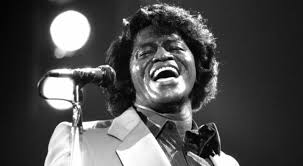
May 3rd marks the 89th anniversary of the birth of the first person to be enshrined in the Rock and Roll Hall of Fame. James Brown was known for his song writing, phenomenal singing and electrifying performances. He released over 50 albums and became known as the “Father of Funk”, “Godfather of Soul” and “Grandfather of Hip-Hop”.

Even JB’s funeral was a grand event. After his passing in 2006,  Brown’s  24 karat gold coffin was pulled by white horses through the streets of New York.  

Brown became larger than life but his upbringing was unimaginably difficult. Born in 1933, James’ family lived in a tiny shack in rural South Carolina.  The house had no windows, running water, electricity, or toilet. There were no neighbors, James had no friends and he wore rags for clothes. When he was four, James’ mother left because of her abusive alcoholic husband.  At the age of eight, James was taken in by his aunt who ran a bordello.  He enticed potential clients into the establishment with his dancing and he eventually learned to play the piano, guitar and harmonica in order to entertain the johns.

James dropped out of school in the sixth grade. He was arrested for robbery at age fifteen and sentenced to the Georgia Juvenile Training Institute where he started a gospel group. Bobby Byrd, a famous gospel singer visited the prison and was told about an inmate known as  “Music Box. After hearing James sing, Byrd convinced the warden to release the teen into his care. James joined Byrd’s gospel group  and started writing  songs and perfecting new dances. James eventually left Byrd’s ensemble and started The Famous Flames. Their big break came when they opened for Little Richard.

Brown became known as “the hardest-working man in show business”. He gained worldwide fame with his 1965 masterpiece  “I Got You (I Feel Good)” . He followed-up with the iconic “Live At The Apollo” album, his bestselling hit “Night Train”, and the tasty “Papa’s Got A Brand New Bag”.  

Brown leveraged his fame to advocate for racial equality. He became a peacemaker in Boston one day after Martin Luther King Jr.’s tragic assassination. He convinced the mayor to rescind his decision to cancel Brown’s scheduled concert. The live show was broadcast on television. Brown urged viewers to avoid violence and his calm persuasiveness kept potential rioters off the streets. After his Boston concert, the federal government finally agreed to allow Brown to perform for our troops in Vietnam (he had been prohibited due to a tax issue).

Brown’s career nosedived when the disco craze hit America. He was rediscovered when John Belushi and Dan Ackroyd asked him to play a preacher in 1980’s “The Blues Brothers”. Eventually, JB’s original recordings gained newfound popularity and he earned millions from the hip-hop records that sampled his work.

Unfortunately the 1980s witnessed Brown developing a fondness for Angel Dust, a hallucinogenic that causes anxiety, paranoia and violent hostility. He was frequently arrested for domestic violence. In 1988, police were called to an office building where Brown was threatening people with a shotgun. JB fled  and was pursued across two states. After police finally shot out his tires, JB disembarked from the car, performed his “Good Foot dance”, and  sang “Georgia on My Mind”. He was sentenced to six years in prison for endangering  police officers but was paroled in 1991. Brown observed “It wasn’t so terrible. I needed the rest bad.”

After his release, Brown continued to find trouble because of his bizarre antics. At the same time he donated generously to children’s causes and advocated for kids to stay in school. He recorded songs emphasizing that message including “Don’t Be a Dropout,” and “Killing is Out, School is In.”

JB continued to perform until weeks before his death from heart failure on Christmas Day 2006. Reports of his net worth ranged from 5M to 100M. A battle over the sixty-three year old’s estate ensued featuring his many children, the children’s mothers, sixteen grandkids, various mistresses and thirty lawyers, After fifteen years, the estate was finally settled in 2021.

James has left the building but his music lives on.

Have a great weekend.

BTW, I am pleased report that my first book was published last week, It’s called “Get Smarter- Be Amazed” My publisher describes it as “A compendium of tantalizing trivia and obscure facts” It’s available on:

Get Smarter. Be Amazed: A Compendium of Tantalizing Trivia and Obscure Facts: Curtin, Ted: 9781977271570: Amazon.com: Books

Get Smarter. Be Amazed: A Compendium of Tantalizing Trivia and Obscure Facts by Ted Curtin, Paperback | Barnes & Noble® (barnesandnoble.com)

Filed Under: Friday Blog

Monkey See

April 29, 2024 by tcurtin

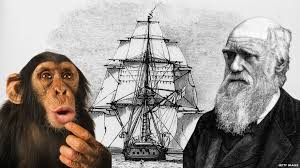
April 19 marks the 142nd anniversary of the death of evolutionary biologist Charles Darwin. The intellectual heavyweight was born on February 12,1809, the same day as fellow non-slacker, Abraham Lincoln. Unlike Abe, who was famously born in a log cabin, Darwin descended from a  family of prosperous physicians and scientists. At age sixteen, Charles began his medical studies at the University of Edinburgh. He found  the lectures boring and was repulsed by the sight of blood so he opted to enroll in divinity school.  

Darwin became pastor of a small church where he became interested in Naturalism, a theory that related scientific method to philosophy.  He had become interested in natural history while studying taxidermy at Edinburgh under the tutelage of John Edmonstone, a freed slave. When Captain Robert Fitzroy invited Darwin to serve as the naturalist on a five year voyage to South America, Charles persuaded Edmonstone to accompany him.

The Mission

Fitzroy’s ship, The Beagle  visited ecologically diverse regions including Brazil, Chile and Australia. While visiting the Galapagos Islands, Darwin observed that island finches shared similarities with finches on the mainland but had modified features that allowed them to gather food easily. This inspired his supposition that evolution occurs by a process of natural selection.  

The Theory

Upon returning  from the voyage, the twenty-eight year old scientist formulated his theory of the origin of species. However, he was reluctant to publish his hypothesis because the British scientific community was heavily influenced by the Church of England. The theory he developed in 1837  was not  made public until 1858 when he made a joint announcement with British naturalist Alfred Russel Wallace.  Wallace had approached Darwin with his own theory of natural selection and Darwin did not want the other scientist taking all of the credit.

Reaction from scientists, the church and the public was extremely negative. Conventional wisdom held that species were unchanging parts of a designed hierarchy and that humans were unrelated to other animals. Nobody wanted to hear that he had descended from apes. Darwin’s professional reputation was tarnished and he described his experience as “living in Hell”. “On the Origin of Species” became a bestseller but Darwin’s theory would not become scientific doctrine until the 1930s.

The primary assertions of the hypothesis  are:

  • Individuals in a population vary significantly from one another.
  • Much of this variation is heritable.
  • Individuals more suited to the environment are more likely to survive and more likely to reproduce and leave their heritable traits to future generations, which produces the process of natural selection.
  • This process results in populations changing to adapt to their environments, and ultimately, these variations accumulate over time to form new species.
  • It is not the strongest of the species that survive nor the most intelligent, but the one most responsive to change.

Potpourri

Always true to scientific processes, Darwin weighed the benefits of marriage in his journal:

“ Pros: Children and Companionship

Cons: Freedom, Travel, and of course, Not forced to visit relatives”

Decision: Charles married his first cousin, Emma.

Three of their children died from illnesses and the remaining six suffered chronic poor health. Darwin knew the risks involved in marriages between cousins but estimated that hundreds of millions of the world’s unions involved two people who were related. Ultimately,  Darwin blamed his children’s illnesses on the fact he married his cousin.

After returning from his famous voyage, Darwin began suffering chronic headaches and heart palpitations that would persist for the rest of his life. Some speculate that he contracted a parasitic illness that eventually led to the cardiac damage, which ultimately caused his death. To combat his illnesses, Darwin followed a strict daily schedule. This included playing two games of backgammon with Emma every night. Of course, the scientist recorded that he had won “2,795 games to her piddling 2,490.”

Darwin was honored with burial at Westminster Abbey, just a few feet away from fellow scientific heavyweight, Isaac Newton.

Although the phrase, “survival of the fittest” is usually attributed to Darwin, it first appeared in  Herbert Spencer’s 1864 publication, “Principles of Biology”.

I calculate Emma’s backgammon winning percentage against the great scientist as 48.96%.

Piddling indeed!

Have a great weekend.

Filed Under: Friday Blog

USA Strong

April 19, 2024 by tcurtin

April 15, 2013 witnessed one of the worst terrorist events in American history. The celebration of the 117th Boston Marathon was shattered by two pressure cooker bombs set off by two subhuman losers. 260 people were seriously wounded and three spectators died including seven year old Martin Richards. The citizens of Boston managed to rally and people from across the world vowed to attend the following year’s Marathon in order to pay tribute to the bombing’s victims.

Meb

A stalwart member of the world’s marathon community was moved by Martin Richards’ death and made plans to participate in the 2014 event. Thirty-eight -year- old Meb Keflezighi was ten years removed from winning an Olympic silver medal. It had been five years since he had become the first American to win the New York City Marathon in nearly three decades. But win or lose, he wanted to participate in Boston’s healing.

Meb’s journey to marathon greatness is the stuff from which movies are made. His family was forced to flee war-torn Eritrea for sanctuary in San Diego when Meb was eleven. One of ten children, he became an All-American runner at UCLA and became a naturalized citizen at age 22.

Meb arrived in Boston several days before the 2014 Marathon and had an emotional meeting with Martin Richard’s parents. He privately decided he was going to try to win the race even though he knew his best running days were behind him.

Wearing a bib on which he had written the names of the 2013 Marathon murder victims, Meb stepped to the starting line in Hopkinton. As a rule, elite long distance runners form a pack for at least the first thirteen miles of a marathon. Thus the pack was surprised when Meb and Josphat Boit started pulling away at mile ten and were shocked when Meb dropped Boit at mile fifteen.

Meb’s brother and manager, Hawi observed , “I’ve seen so many marathons where, when you have a pack of runners chasing one person . . . the chances that someone from that pack catches the leader is almost 99 percent.” The pack assumed that Meb would burn out but Meb thought  “They’re making the biggest mistake of their lives”. ’

There was widespread concern that the 2014 crowd would be understandably somber. Luckily for Meb, the crowd was more joyous than ever and provided enormous inspiration.  Still, with one mile left, Meb was being closely chased by Wilson Chebet. Meb was at his physical and mental limits and almost stopped to vomit. He thought about easing off to save some energy but Meb knew if Chebet caught him, all momentum would be lost. Then, Meb reasoned “He must be hurting. Am I willing to hurt a little bit more? ”

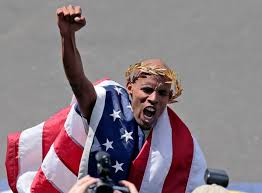
As he made the turn onto the final leg, the devout Christian  crossed himself and found one more gear.  Meb was attired in red, white, and blue and the crowd started chanting  “USA! USA!”. Meb pumped his fists and signed the cross one last time as he passed the site where the first bomb had detonated one year earlier. He held his arms high as he broke the tape.

With an American flag draped around his shoulders Meb climbed the podium to accept the golden wreath. It was the first time in 31 years that an American man had won Boston. The victor wept as the national anthem played.

Healing

Many in the record field of 36,000 had their own poignant story. Some survivors of the 2013 attack who’d lost limbs competed either in wheelchairs or on newly fitted prosthetic legs.

At 2:49 p.m. the moment the first blast had rocked the previous year’s event, the crowd hushed. When the clocked registered 2:50, the crowd erupted in cheers.

Meb Keflezighi retired from competitive marathoning in 2017 but he returned to Boston this past month, wearing bib number 2014 to commemorate the year of his historic victory. He finished 2024’s race in a terrestrial  3:08.

Along with the courageous survivors of the 2013 attack, Meb will always be remembered for turning one of Boston’s darkest days into one of its most joyous.

Have a great weekend.

Filed Under: Friday Blog

Vincent

April 16, 2024 by tcurtin

March 30 marks the171st anniversary of Vincent Van Gogh’s birth. Vincent was born into a relatively wealthy family in Zundert, Netherlands in 1853. His father didn’t make much money but because he was a minister, he was provided a house complete with maids, cooks, and a gardener. Adding to the family’s comfort was the fact that Vincent’s mother descended from a wealthy family. 

During his adolescent years Vincent was sent to a couple of boarding schools where he became homesick and very unhappy. He eventually applied for admission to a theological school however the mercurial teen refused to take the Latin portion of the exam because he believed Latin was a “dead language for peasants”. Admission was denied.

Vincent began working for his uncle’s art dealing company but became severely depressed and left to become a missionary in a coal-mining district in Belgium. Vincent generously gave up his comfortable lodgings to a homeless person and moved to a small hut. Church authorities dismissed Van Gough for “undermining the dignity of the priesthood”.

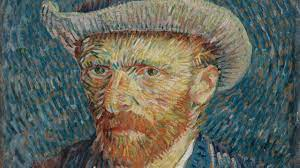
His father wanted to commit him to an asylum, but Vincent moved in with a mining family. Inspired by the local scenery, he launched his artistic career at the age of 27. Because he could not afford to pay models, the self-taught artist created hundreds of paintings of landscapes, peasants and his famous self-portraits. Art dealers eschewed Vincent’s work because it was too gloomy.

Van Gogh suffered from temporal lobe epilepsy; a neurological condition characterized by unprovoked seizures. Adding to Van Gogh’s psychological problems were his amorous misadventures. A couple of women were open to his marriage proposals, but their parents shot down any thoughts of a relationship with the unstable artist. More common were the women who rejected his proposals outright including one who exclaimed “nooit, neen, nimmer” (“no, nay, never”) Ouch!

Vincent moved to his beloved younger brother Theo’s Paris apartment, but the artist suffered from declining mental health. His alcohol consumption increased and it is believed he started drinking turpentine and eating his paints. Vincent decided to escape Paris and move to Arles in southern France. There, his artwork grew brighter and he began painting wheat fields and sunflowers.   

Theo paid artist Paul Gauguin to move to Arles to watch over Vincent but the two artists constantly quarreled. During one of his seizures, Van Gogh attempted to attack Gauguin with a razor, resulting in Vincent cutting off part of his own ear. Arles residents circulated a petition asserting that Vincent presented a danger to the community. The artist committed himself to an asylum in 1889 where he painted the iconic “Starry Night”.  He also painted a portrait of his doctor Félix Rey. However, Rey was unimpressed and gave the painting away. The portrait is now housed at Moscow’s Pushkin Museum of Fine Arts and is estimated to be worth over $50M.  

In 1890, van Gogh checked himself out of the asylum and moved to the Paris suburb of Auvers-Sur-Oise. On July 27, 1890, he shot himself in the chest and died two days later from a related infection at age 37.  His final words to Theo were, “La tristesse durera toujours” (the sadness will last forever). Devasted by Vincent’s death, Theo passed away four months later.

Short Strokes

Most of Vincent’s 2,100 pieces of art were created during his last two years on earth. The value of these works today reaches billions of dollars.

During his life, Vincent sold only one painting for which he received only 400 francs.

The most famous weapon in art history, the gun Vincent used to shoot himself, was auctioned in 2019 for $182,000.
 
In 1987, on the anniversary of Vincent’s birth, his painting “Still Life – Vase with Fifteen Sunflowers” was sold to a Japanese businessman for what was a record price of over $39M.

The highest price ever paid for a work of art was Van Gogh’s portrait of Dr Paul Gachet for $83M in 1990. It is owned by a reclusive European billionaire and will sell for several hundred million dollars If it ever returns to the market.

Although Vincent’s life was tragic, he has provided generations with great happiness and inspiration.
 
Passez un bon week-end.

Filed Under: Friday Blog

Resurrecting The Olympics

April 16, 2024 by tcurtin

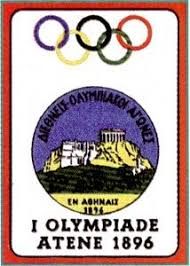
The modern Olympic Games were inaugurated on April 6 , 1896 in the games’ ancient birthplace – Greece. The ancient Olympics had been held every four years for twelve centuries.

The first Olympic games took place in 776 BC in the shadow of Mount Olympus, home of the Greek gods.  The games were part of a religious festival that honored Zeus and originally consisted of only one event -a footrace that covered one length of the track at Olympia. Subsequent Olympic convocations expanded the agenda to include wrestling and the pentathlon which incorporated the footrace, long jump, javelin throw, discus throw and wrestling. Chariot racing was added eight years later.

Ancient Olympic athletes weren’t worried about fashion conventions or corporate sponsorships because they competed naked. The word “gymnasium” comes from the Greek “gymnos” meaning nude – the literal translation of gymnasium is “school for naked exercise.” The athletes paid tribute to the gods by oiling themselves and looking masculine. I expect this will make for lively conversation at my rugby team’s reunion tomorrow.

The games were banned in 383 AD by Roman Emperor Theodosius II on the grounds that they were a pagan celebration and an afront to Christianity.

1896

Pierre de Coubertin, a French baron, who was the driving force behind the revived games insisted that the events take place in Greece. Athletes from 14 countries participated in 43 events including track, cycling, swimming, gymnastics, weightlifting, wrestling, fencing and tennis. Most of the foreign athletes were wealthy college students or members of athletic clubs. Hungary was the only country to send a national team.

On the event’s first day, American James Connolly won the triple jump to become the first Olympic champion in more than 1,500 years. Some of the competitors in the 1896 games were vacationers who chanced upon the event and decided to compete. John Pius Boland, a vacationing Irishman agreed to participate after a friend registered him for the tennis event. Boland ended up winning both the singles and doubles events despite using a borrowed racquet and wearing leather-soled shoes. Why do I have a vision of John Candy stumbling out of his summer rental cottage to miraculously win gold?

The 1896 games featured four nautical events staged in the Bay of Zea. Competitors were ferried out to a wooden raft, and from there they raced toward shore. Competitors fought twelve-foot seas and 55-degree water temperatures.  Hungarian champion Alfréd Hajós slathered his body with grease to stave off the cold during the 1,500 meters. “My will to live completely overcame my desire to win,” he later said of the hypothermic ordeal. Many of the numbed competitors simply gave up and luckily were rescued from the frigid waters.  

The revamped games featured the first marathon. The race, conceived by Frenchman Michel Breal followed the `route of Pheidippides who in 490 BC was sent from the plain of Marathon to Athens to announce the defeat of the invading Persian army. Half the marathoners quit from exhaustion, and another was disqualified after being seen riding in a carriage for part of the race. Spiridon Louis, an obscure Greek villager won the race despite his decision to stop halfway for a snack of eggs and wine.

Members of the U.S. delegation were so inspired by the games that they issued a statement that the Olympics “should never be removed” from Greece. Baron Coubertin vehemently disagreed, insisting that the event take place in a different country every four years. He doubted that the cash-strapped Greek government could be depended on to host the games and he wanted the Olympics to gain worldwide acclaim.

Coubertin was also adamant on the subject of women participants. Women were excluded in 1896 as the Baron proclaimed that the games should be “the solemn and periodic exaltation of male athleticism …… and female applause as reward.”

Despite Coubertin’s opposition, women made their debut in the golf and tennis events at the 1900 Paris Games.  

It would not be until the 2012 London Games that all participating countries sent female athletes.

Progress is great but, man, those ancient games must have been an interesting spectacle.
 

Filed Under: Friday Blog

  • « Go to Previous Page
  • Page 1
  • Interim pages omitted …
  • Page 9
  • Page 10
  • Page 11
  • Page 12
  • Go to Next Page »

Copyright © 2026 · Ted Curtin Stories · Site by: web360